
Device Quality
Genuine Inside. Built to Last.
Why the parts inside a phone decide how a bulk order performs, and how to check for them before you buy.
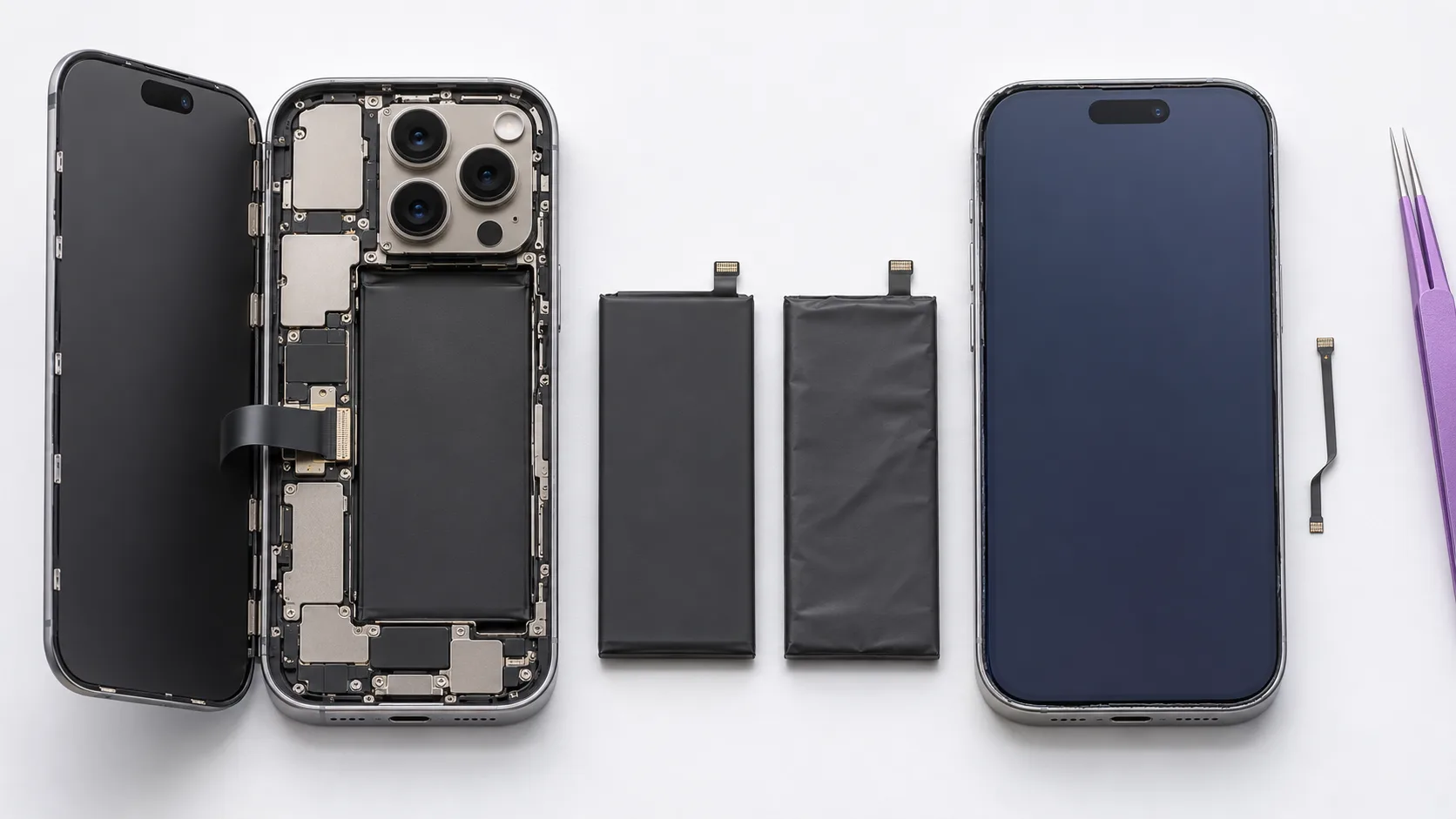
OEM parts for mobile phones are the original components made by or for the phone’s manufacturer: the display, battery, cameras and logic board the device shipped with. Aftermarket parts are third-party copies built to fit.
When you buy phones in bulk, that difference decides how the fleet performs, how long it lasts and what it’s worth when you resell or retire it. Every phone Nobility Wireless sells has OEM parts.
What are OEM parts for mobile phones?
OEM parts are components made by the original equipment manufacturer, or to its specification, for that exact model. They’re the same parts a phone has when it leaves the factory.
There are really three kinds of parts you’ll find in a phone on the secondary market.
| Part type | What it is | What to expect |
|---|---|---|
| OEM (original) | Made by or for the manufacturer for that model | Factory fit, calibration and performance |
| Used genuine | A genuine part taken from another phone of the same model | Can perform like new, but quality depends on its history |
| Aftermarket | A third-party part built to fit | Quality varies widely by batch and supplier |
The parts that matter most are the ones users touch and rely on all day: the display, the battery and the cameras.
Why do OEM parts matter when you buy phones in bulk?
Because one bad part type repeats across every unit in an order. A phone with an aftermarket screen is an annoyance. Five hundred of them is a fleet problem.
OEM parts for mobile phones affect four things every buyer cares about:
- Performance: touch response, brightness, color and battery life behave the way the manufacturer designed them.
- Reliability: fewer early failures, fewer tickets, fewer swaps.
- Security features: on some models, biometrics and other features depend on genuine, properly calibrated parts.
- Value at end of life: genuine parts protect trade-in and resale value when you retire the fleet.
A lower price per unit doesn’t help if a slice of the order fails in the first month or sells for less at the end.
Who should care about OEM parts?
Anyone who buys, deploys, supports or resells phones at volume should care about OEM parts for mobile phones. Each team pays for aftermarket parts in a different way.
| Team | Why OEM parts matter to them |
|---|---|
| Procurement | Fewer returns, predictable quality across every unit, and a supplier claim they can hold in writing |
| IT and device management | Fewer support tickets, consistent behavior across the fleet, and features that work as documented |
| Resellers and MVNOs | Fewer customer complaints and returns, and devices that hold their value |
| Insurance and replacement programs | Replacement devices that match the original’s quality |
| Finance and asset management | Higher residual value at trade-in or buyback |
| App testing teams | Hardware that behaves like the phones real users carry |
For every one of them, the question is the same: does every phone in the order have OEM parts, or just some?
What goes wrong with aftermarket parts?
Mostly inconsistency. Aftermarket displays and batteries can work fine in one batch and fail in the next, and the problems often show up only after deployment.
Apple’s own guidance on genuine iPhone displays lists what can go wrong with a non-genuine screen:
- Parts of the screen may not respond, or touches register in the wrong place
- Touches may register during calls, and the screen may stay on
- True Tone and auto-brightness may not work correctly
- Color may look off, and maximum brightness may be lower
- The battery may drain unexpectedly
Batteries carry their own risk. A poorly made battery can hold less charge, age faster or swell. And because each aftermarket supplier builds parts differently, a mixed order can behave like a mixed fleet.
How can you check whether a phone has OEM parts?
On iPhone, open Settings > General > About and look for Parts and Service History. On Android, rely on your supplier’s inspection report and test a sample on arrival.
iPhone
If an iPhone has been repaired, recent iOS versions show a Parts and Service History section in Settings > General > About. Depending on the model, it covers the battery, display, cameras and logic board, with labels like:
- Genuine: the repair used genuine Apple parts and processes.
- Used: a genuine part that was previously installed in another iPhone.
- Unknown: the part may be non-genuine or not working as expected.
If no Parts and Service History section appears, that usually means no tracked part has been replaced. Apple notes that an Unknown part might affect trade-in value.
Android
There’s no universal built-in equivalent across Android brands. Ask for a device-level inspection report, check display brightness and touch response on a sample, and confirm battery health.
Check the IMEI too
While you’re checking parts, check status. The GSMA Device Check service shows whether a device’s IMEI has been reported lost or stolen.
What should you ask a supplier before a bulk order?
Ask five questions, and get the answers in writing: do your devices use OEM parts, how do you inspect them, what records come with each unit, what’s the return policy, and how are IMEIs checked?
- Do every one of your devices use OEM parts? Not “most”. Every one.
- How is each device inspected? Look for a documented, multi-point inspection on every unit, not spot checks.
- What records come with the order? An IMEI manifest and a device-level history report should be available.
- What happens if a device arrives faulty? Get the DOA terms before you order.
- Are IMEIs checked against block lists? A stolen or blocked device is worse than one with a bad part.
For a wider checklist, see how to vet a wholesale phone distributor.
How does Nobility make sure every device has OEM parts?
We sell only devices with OEM parts, and every unit is inspected and documented before it ships. We sell phones and tablets, not replacement parts.
- OEM parts only: every phone and tablet we sell has OEM parts.
- Inspected: every device passes a 35-point PhoneCheck inspection, and our return rate is under 1%.
- Battery tested: Certified Like-New and Certified Pre-Owned devices have 80%+ battery health.
- Documented: every shipment includes an IMEI manifest and chain-of-custody record, and you can request a Device History Report for any unit.
- Covered: a 30-day DOA guarantee on all grades, and the manufacturer warranty on new devices.
- Ready to deploy: factory unlocked on AT&T, T-Mobile and Verizon, and 100% compatible with your MDM. See our MDM-ready devices.
That’s how we’ve shipped 1M+ devices to 500+ businesses, including hospitals, government agencies and Ivy League schools. Building an iPhone fleet? Browse our wholesale Apple devices. Planning a longer device lifecycle? Read our guide to sustainable bulk phone buying. And when the fleet retires, genuine parts pay off again through our device buyback program.
Want phones you don’t have to second-guess?
Tell us the models and quantities you need. You’ll get a quote in about 4 hours for devices with OEM parts, with orders from 10 units and shipping in 1–3 business days.
Request a quoteFrequently asked questions
Are refurbished phones made with OEM parts?
Not always. It depends on who refurbished them and which parts they replaced. Some refurbishers use aftermarket screens and batteries to cut costs. Ask every supplier in writing whether all of their devices use OEM parts. Every phone and tablet Nobility sells has OEM parts, whether it’s new or certified.
What does “Unknown Part” mean on an iPhone?
It means iOS couldn’t verify that a replaced part is genuine. Apple says the part may be non-genuine or may not be working as expected. It appears in Settings > General > About under Parts and Service History, and Apple notes it might affect the phone’s trade-in value.
Can you check for OEM parts on Android phones?
There’s no single built-in check that works across all Android brands. The practical approach is to rely on your supplier’s device-level inspection report, request a device history report, and test a sample on arrival for touch response, display brightness and battery health.
Is a used genuine part the same as an OEM part?
It’s a genuine part, but it isn’t new. A used genuine part comes from another phone of the same model, so it can perform like the original. Its quality depends on its history, though, and Apple labels it “Used” in an iPhone’s Parts and Service History.
Do OEM parts affect resale and trade-in value?
Yes. Buyers and trade-in programs check for non-genuine parts, and Apple notes that an Unknown part might affect an iPhone’s trade-in value. Phones with OEM parts are easier to resell and typically keep more of their value when you retire a fleet.
Are aftermarket batteries a safety risk?
They can be. Apple warns that repairs using non-genuine parts may affect a device’s safety, and battery quality varies widely between aftermarket suppliers. A poorly made battery can hold less charge, age faster or swell. For business fleets, OEM batteries are the safer choice.
Does Nobility sell replacement phone parts?
No. Nobility Wireless sells complete phones and tablets, not replacement parts. Every device we sell has OEM parts, passes a 35-point PhoneCheck inspection and ships with an IMEI manifest. If you need devices for a fleet, resale or testing, request a quote.
How can we verify OEM parts on a bulk order?
Spot-check a sample when the order arrives. On iPhones, open Settings > General > About and look for Parts and Service History. For any brand, you can request a Device History Report for each unit from us and match it to the IMEI manifest that ships with the order.
What happens if a device arrives with a problem?
It’s covered. Every grade carries a 30-day DOA guarantee, and new devices also carry the manufacturer warranty. Our return rate is under 1%, because every device passes a 35-point PhoneCheck inspection before it ships. We also follow a documented RMA process with a clear turnaround.
What’s the minimum order for phones with OEM parts?
Our minimum order is 10 units, and we fill orders up to 10,000+. Every device in our catalog has OEM parts and is in stock. Send us your models and quantities, and you’ll get a quote in about 4 hours, with shipping in 1–3 business days.