
Mobile procurement hasn't changed much in the last decade — until now. If your process still runs on email threads, spreadsheet trackers, and gut checks on supplier reliability, you're spending time on decisions that mobile procurement technology is already handling for the buyers ahead of you.
AI mobile procurement has quietly worked its way into every stage of bulk device sourcing — from finding and vetting suppliers, to timing purchases, to catching blacklisted devices before they ever land in your warehouse. The buyers using these tools are moving faster and getting burned less. This is where AI mobile procurement stands in 2026, and what it actually means for your next bulk order.
I've been in the secondary mobile market for 20 years. I've watched IT teams overpay by 30% because they had no visibility into where the market was heading. I've seen procurement managers get stuck with a pallet of blacklisted devices because IMEI verification was done manually — or not at all. The problems aren't new. What's new is that the tools to prevent them are actually good now. And if you're sourcing iPhones for business or managing a fleet refresh, the gap between buyers using AI mobile procurement tools and buyers who aren't is getting wider fast.
Supplier vetting used to be all relationships. Now it's data.
Finding a reliable wholesale phone supplier has always been the hardest part of bulk mobile procurement. Not because good suppliers don't exist, but because the bad ones look the same on the surface. Inconsistent stock, delayed fulfillment, counterfeit devices mixed in — you often don't know until the shipment arrives.
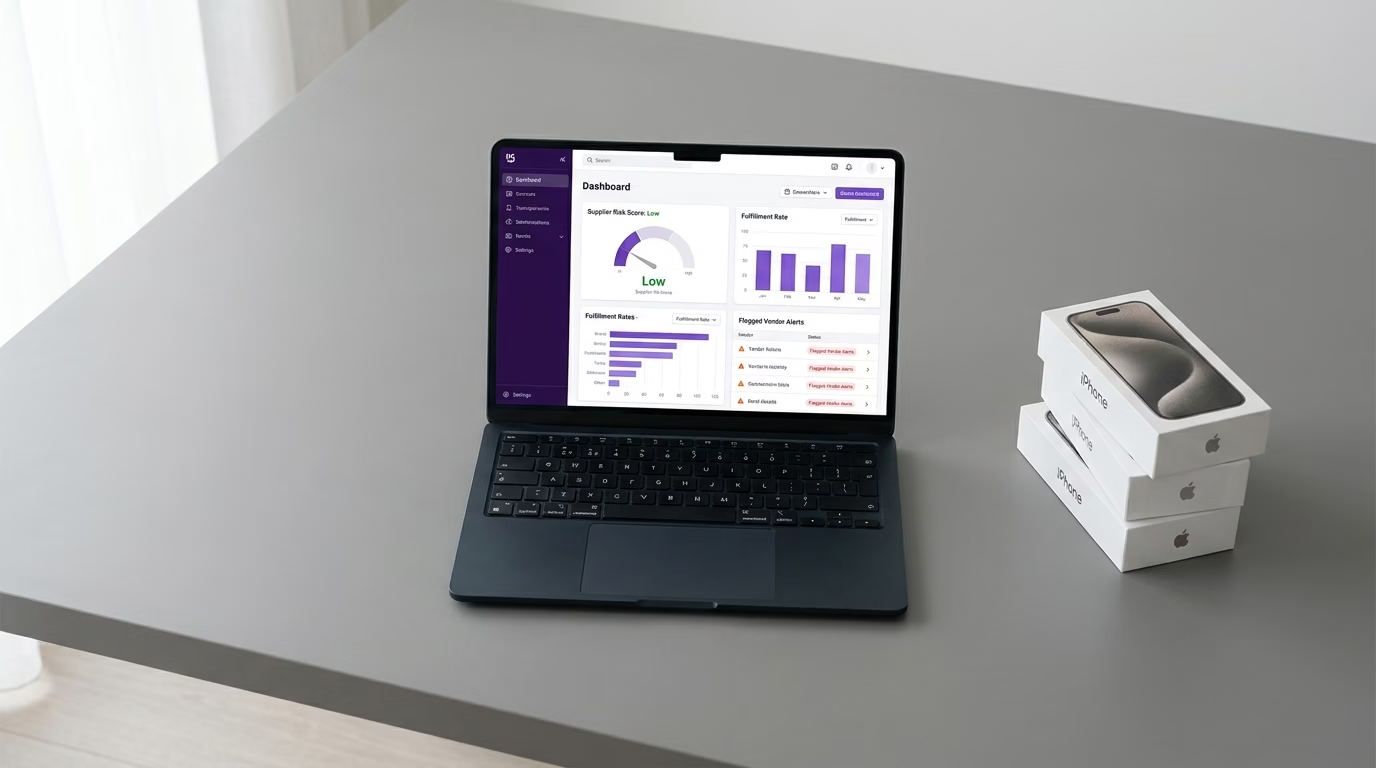
AI changes that vetting process. Procurement teams are now running supplier data — transaction history, fulfillment rates, dispute records, pricing consistency over time — through models that flag risk before you commit to an order. It's the difference between trusting a reference and actually analyzing the pattern.
Real-time risk scoring can flag a supplier's history of grade inflation or delayed fulfillment before you've cut a single PO.
At Nobility, every device in our catalog goes through a 35-point PhoneCheck QC inspection before it ships — a hard process standard, not a spot check. That's part of why our return rate sits under 1%. AI doesn't replace that physical inspection. But on the sourcing side, it's making it a lot easier to identify which suppliers are worth working with. See our Phone Comparison Guide for a deeper look at supplier evaluation criteria.
Price timing is now a data problem, not a guessing game
Wholesale phone pricing moves. New model launches push secondary market prices down on prior-gen devices — sometimes fast, sometimes not for months. Demand spikes around enterprise refresh cycles. If you're buying on a fixed procurement calendar without visibility into where prices are heading, you're almost certainly overpaying on some orders.
Wholesale pricing intelligence — Market tools flag the right buying window, critical when per-unit cost swings $50–$150 on a single model.
AI-driven pricing tools track historical wholesale data and current market signals to flag when conditions favor buying. For IT managers sourcing 200+ units of Samsung or Apple devices, better timing alone can shift per-unit cost by $50–$150. Even on something like the iPhone 13 in wholesale volume, the spread between a well-timed order and a reactive one is real money.
We price our catalog 20–40% below MSRP and work directly with buyers on volume. But even beyond Nobility, the broader market has enough volatility that buyers doing high-volume AI mobile procurement should be using some kind of pricing intelligence tool — whether that's a purpose-built platform or systematic tracking of wholesale comps over time. We break down the options in our guide to mobile procurement tools.
Contract negotiation and compliance are getting faster
Enterprise mobile procurement involves a lot of paperwork — vendor agreements, compliance documentation, data security addenda, sometimes HIPAA requirements for healthcare deployments. Generative AI tools are making a real dent here.
Contract review that used to take a legal team days can now be flagged for issues in minutes. Procurement teams are using AI to compare terms across multiple supplier quotes, identify non-standard clauses, and draft compliant vendor agreements faster than their previous process allowed.
Delays in procurement often aren't about budget approval — they're about paperwork bottlenecks. Our healthcare and government buyers typically need documentation we're already set up to provide. If you're also figuring out whether to issue company phones to employees, that decision affects procurement scope and compliance requirements significantly.
Demand forecasting: buying the right amount at the right time
Overbuying ties up capital. Underbuying means emergency orders at worse pricing. Both happen constantly in enterprise mobile procurement, and both are largely preventable with better forecasting.
AI-driven demand forecasting tools pull in historical order data, seasonal patterns, and real-time signals to recommend order quantities and timing. For wireless retailers managing device inventory, or MVNOs planning subscriber device programs, this is the difference between a Q4 stock shortage and a well-timed bulk order placed six weeks out.
The underlying logic isn't complicated: predictive models do this better than spreadsheets and institutional memory. What's changed is that these tools are now accessible to mid-market procurement teams, not just enterprise operations with dedicated supply chain analysts.
IMEI verification at scale — this one's non-negotiable
Manual IMEI verification is impractical at bulk volume. If you're sourcing 300 devices and checking each IMEI by hand, you're either spending days on it or skipping it entirely. And skipping it is how you end up with a pallet of phones that won't activate.
AI-powered IMEI scanning tools check bulk device lists against the GSMA Device Registry in real time — flagging lost, stolen, or carrier-blocked devices before purchase. Machine learning layers on top to detect patterns of fraudulent supplier behavior: grades that don't match condition, serial numbers clustering suspiciously, suppliers whose blacklist rate is above market norms.
Every device we ship has been through IMEI validation as part of our PhoneCheck process. But if you're sourcing from multiple channels, you need this in your own stack too. Our certified refurbished devices page covers our grading standards in full.
AI vs. traditional bulk phone procurement: at a glance
| Procurement task | Traditional approach | AI-assisted approach |
|---|---|---|
| Supplier vetting | Reference calls, gut instinct | Data-driven risk scoring, automated flags |
| Pricing decisions | Fixed calendar, market guesswork | Historical + real-time market intelligence |
| Contract review | Legal team, days to weeks | Automated clause review, draft generation |
| Demand forecasting | Spreadsheets, prior-year orders | Predictive models, real-time signals |
| IMEI verification | Manual spot checks, slow and incomplete | Bulk AI scan against GSMA registry, instant |
| Fraud detection | Discovered post-purchase | Pattern detection flags risk pre-order |
Where this is all heading
Most enterprise procurement teams are still early in AI adoption. The practical near-term wins are the ones above: better supplier vetting, pricing intelligence, IMEI verification at scale, demand forecasting. Those aren't moonshot applications — they're workflow improvements available right now, and the ROI on AI mobile procurement is real and measurable.
We work with enterprise IT teams, MVNOs, healthcare and government buyers who need more than a price list. Our catalog covers 100+ devices across Samsung, Apple, Google Pixel, and Motorola — all unlocked, all carrier-agnostic, all QC'd before they ship. See how it fits into a full enterprise procurement workflow.
Ready to talk through your next bulk order? Get pricing, device availability, and procurement support from a team that actually knows the secondary market. Request a bulk quote
AI mobile procurement — frequently asked questions
What is mobile procurement technology?
Mobile procurement technology is the software and AI tooling buyers use to source smartphones and tablets in bulk: supplier risk scoring, wholesale price tracking, demand forecasting, contract review, and bulk IMEI verification. It replaces spreadsheet-and-email workflows with data that flags risk and timing before an order is placed.
What is AI mobile procurement?
AI mobile procurement refers to using artificial intelligence tools to automate and improve the process of sourcing, vetting, pricing, and verifying bulk mobile devices for business use. It covers everything from supplier risk scoring and demand forecasting to real-time IMEI verification at scale — replacing manual processes that slow down enterprise device sourcing.
How does AI help with bulk phone supplier vetting?
AI-powered vetting tools analyze supplier transaction history, fulfillment rates, grade consistency, and dispute records to produce a risk score before you commit to a purchase order. This replaces reference calls and gut instinct with pattern-based analysis — catching grade inflation, delivery delays, and counterfeit risk that manual checks miss at volume.
Can AI tools verify IMEIs for bulk device orders?
Yes. AI-assisted IMEI verification tools check entire device manifests against the GSMA Device Registry in real time, flagging lost, stolen, or carrier-blocked devices before purchase. At bulk volume — 100, 500, or 1,000+ units — manual IMEI checking is impractical. Automated verification is the only reliable approach at scale.
Does Nobility Wireless use AI in its procurement process?
Every device in the Nobility catalog goes through a 35-point PhoneCheck QC inspection and IMEI validation before it ships — a hard process standard, not a spot check. That's why our return rate is under 1%. We also use market intelligence to maintain competitive pricing 20–40% below MSRP across Samsung, Apple, Google Pixel, Motorola, Lenovo, and TCL.
What types of businesses use AI mobile procurement tools?
Enterprise IT teams managing fleet refreshes, MVNOs sourcing subscriber devices, insurance carriers handling device replacement programs, healthcare systems procuring HIPAA-compliant devices, and wholesale resellers managing high-volume inventory all benefit from AI mobile procurement. Any organization sourcing 50+ devices at a time has enough volume to justify automation.
How do I get started with bulk device procurement through Nobility?
The fastest way is to request a quote directly — our team responds with pricing, availability, and lead times based on your specific device mix and volume. We work with IT directors, procurement managers, and operations leads across MVNOs, enterprise, healthcare, and government. Request a bulk quote