
Fleet & Logistics
What your drivers ask about phones, what your fleet actually needs, and the picks that fit each role, from long-haul cabs to the loading dock.
Key takeaways
- The best phones for truck drivers are chosen by role, not by spec sheet: long-haul, regional, last-mile and yard work each need something different.
- FMCSA lets an ELD run on a smartphone, as long as it’s mounted in a fixed position and visible from the driver’s seat.
- Commercial drivers may only use phones hands-free. Employers face penalties of up to $11,000 for allowing hand-held use.
- Factory unlocked phones let a fleet pick AT&T, T-Mobile or Verizon by lane instead of locking every truck to one carrier.
- Rugged phones only pay off for drivers who work outside the cab. Cab-only drivers do fine with a standard phone, a case and a good mount.
The best phones for truck drivers do three jobs at once: they keep the driver reachable across thousands of miles of uneven coverage, they run the ELD and dispatch apps the fleet depends on, and they survive years of mounts, chargers and truck-stop parking lots. The phone a driver would pick for themselves is rarely the one that keeps a fleet compliant and easy to manage. This guide covers both sides. It answers the questions drivers ask most often, then lays out what fleet managers should standardize on for each role. If you run the logistics side of the business, our logistics device programs page covers sourcing at scale.
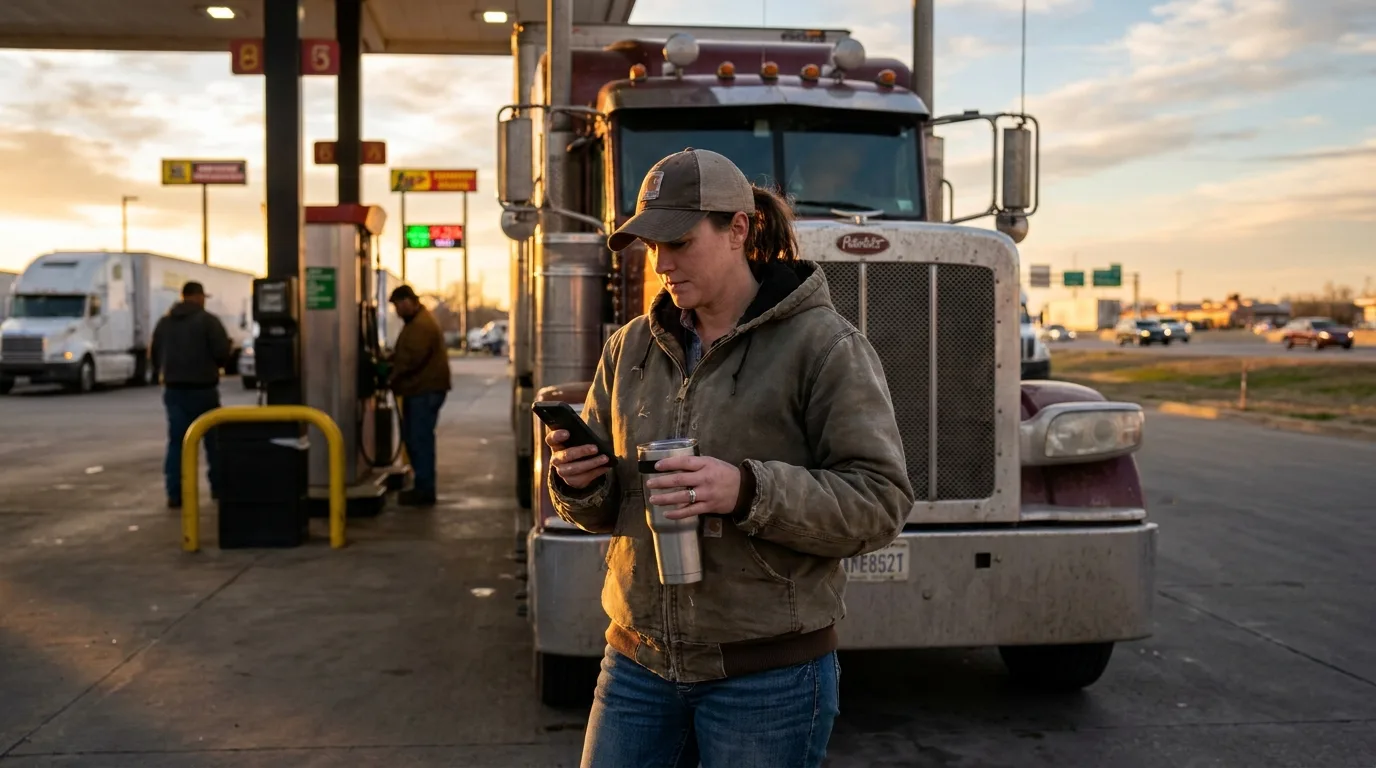
What makes a phone good for truck drivers?
A good truck driver phone has reliable coverage on the routes you run, a battery that lasts a full shift, hands-free controls that keep the driver compliant, enough durability for life in a cab, and support for the fleet’s management tools.
Specs matter less than fit. A flagship camera does nothing for a driver in rural Nevada, but a phone that holds signal, mounts securely and updates for years does. Use these five criteria to judge any model:
- Coverage flexibility. Factory unlocked phones work on AT&T, T-Mobile and Verizon, so the fleet can match the carrier to the lane.
- Battery health. A phone that dies mid-route takes the ELD, navigation and dispatch with it. Check battery health before deployment, not after.
- Hands-free operation. Voice assistants, single-touch calling and Bluetooth support make it practical to follow FMCSA’s hands-free rule.
- Durability for the job. Cab-only drivers need a case and a mount. Drivers who work docks, yards or flatbeds need a rugged phone.
- Long software support and MDM compatibility. Security updates and mobile device management keep the phone usable and controllable for its whole service life. Google, for example, commits to seven years of OS and security updates for the Pixel 9a.
The best phones for truck drivers, by role
The right phone depends on where the driver spends the shift: long-haul drivers need longevity and coverage, last-mile drivers need value at volume, and drivers who work outside the cab need a rugged phone.
Standardizing on one or two models per role keeps training, accessories and app support simple. These picks are examples from phones fleets commonly deploy. Each links to its wholesale page.
| Driver role | What the role needs | Example pick | Why it fits |
|---|---|---|---|
| Long-haul (OTR) | Weeks on the road, long-term updates, strong app support | iPhone 17e | Current iPhone hardware at the lower end of Apple’s price range, with Apple Business Manager support for fleet setup |
| Regional and LTL | Daily routes, dependable updates, fair price per unit | Google Pixel 9a | Seven years of OS and security updates from Google, which stretches the replacement cycle |
| Last-mile and local delivery | High volume, low cost per device, quick swaps | Samsung Galaxy A16 5G | Budget price with six generations of Android upgrades promised by Samsung |
| Yard, dock and flatbed | Drops, rain, dust and gloves | Samsung Galaxy XCover7 Pro or XCover6 Pro | IP68 rated, MIL-STD-810H tested and built for outdoor work. The XCover6 Pro is the lower-cost option. |
| Spares and swap pool | Cheap backups for broken or lost phones | Moto G Play (2026) | Low cost per unit, so a spare in every terminal doesn’t strain the budget |
Looking for in-cab screens instead? See our guide to the best tablets for truck drivers.
Do truck drivers need a rugged phone?
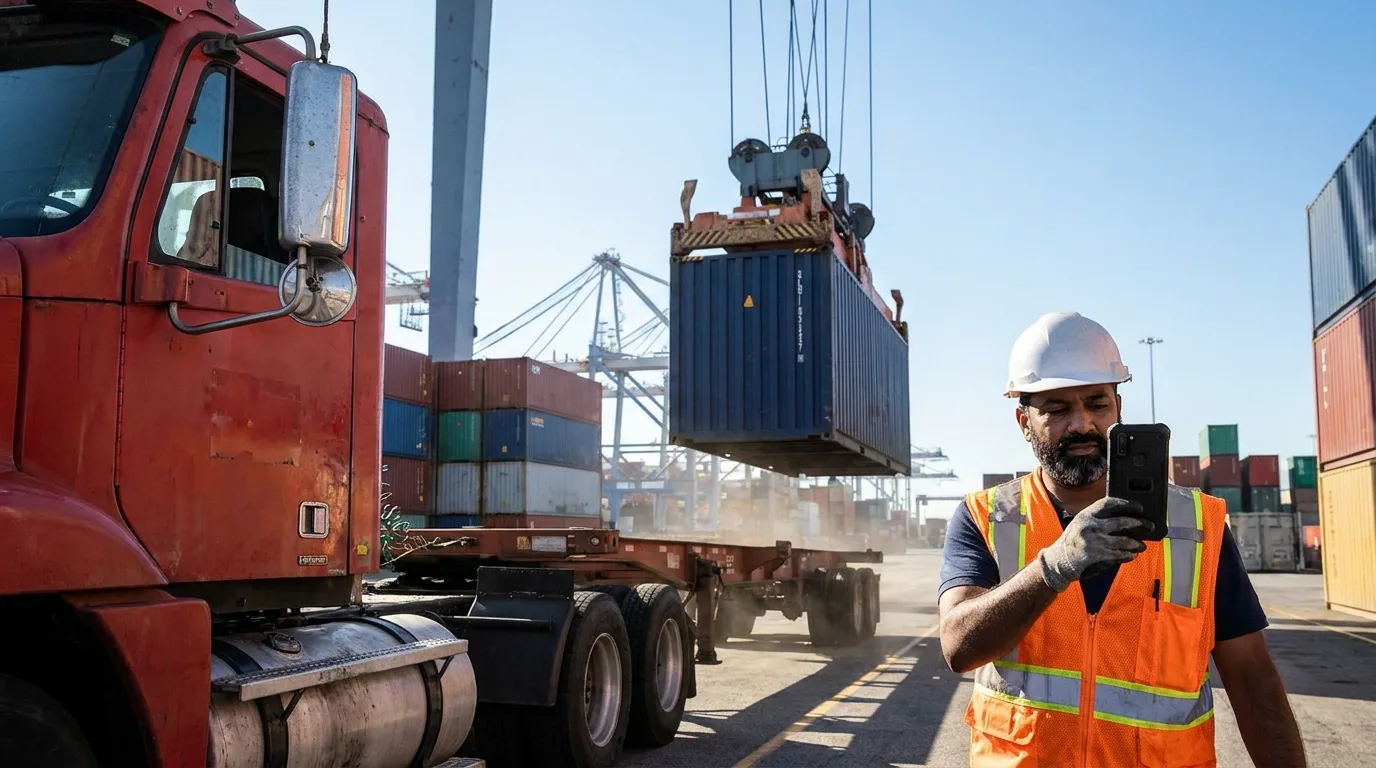
Only if they work outside the cab. Drivers who load, unload, strap down freight or walk yards benefit from a rugged phone. Cab-only drivers are better served by a standard phone in a good case.
Rugged phones cost more, and that premium only pays for itself when the phone actually faces drops, weather and dust. The Galaxy XCover7 Pro and XCover6 Pro, for example, carry IP68 ratings and MIL-STD-810H testing, which covers drops, temperature extremes and dust. That makes sense for flatbed, container and yard drivers. For an OTR driver who spends 10 hours a day in a climate-controlled cab, the same money buys more on a standard phone.
A simple rule: if a driver’s phone leaves the cab more than a few times a shift, go rugged. If it lives on the mount, don’t. Fleets that also run construction or industrial crews can compare options in our guides to rugged phones for industrial use and the best phones for construction workers.
Can the ELD run on a driver’s phone?
Yes. FMCSA allows an electronic logging device to run on a smartphone if the ELD meets the rule’s technical specifications and the phone is mounted in a fixed position, visible from the driver’s normal seated position.
That requirement comes from 49 CFR 395.22(g), and FMCSA confirms it in its ELD frequently asked questions. The ELD itself is the certified combination of the provider’s app and its vehicle connection. The phone is the screen it runs on. So when choosing a phone for ELD use, check three things:
- Operating system support. ELD providers register their apps by platform and list supported OS versions. Make sure the phone runs a version your provider supports, and will keep receiving updates.
- A fixed mount. A phone loose on the seat doesn’t meet the rule. Budget a mount for every truck.
- Power. ELD apps run all day. Pair every phone with a cab charger and check battery health before it ships.
Some fleets prefer a bigger in-cab screen for logs, inspections and DOT roadside checks. If that’s you, compare the options in our truck driver tablet guide.
What does the FMCSA hands-free rule mean for phone choice?
Commercial drivers can’t hold a phone, dial with more than one touch, or text while driving. The phone a fleet chooses has to work well hands-free, and the fleet carries liability if it doesn’t.
According to FMCSA’s No Texting Rule fact sheet, penalties reach up to $2,750 for drivers and up to $11,000 for employers that allow or require hand-held use while driving. Those amounts are adjusted for inflation over time. Repeat violations can disqualify a driver. That makes phone choice a fleet compliance decision, not just a driver preference. Look for:
- A reliable voice assistant that can call, message and navigate without a touch
- Strong Bluetooth for headsets and the truck’s audio system
- A size that fits a standard cab mount within easy reach
- MDM support, so the fleet can limit distracting apps while the vehicle is moving
Which carrier works best for truck drivers?
No single carrier wins everywhere. AT&T, T-Mobile and Verizon each have stronger and weaker regions, so the best choice depends on the lanes your drivers run.
This is the question truckers ask each other most, and the honest answer is that it varies by route. Rural interstates, mountain passes and long stretches of the West expose gaps on every network. The fleet answer is to stop treating carrier choice as permanent. Buy factory unlocked phones, map your most common lanes against each carrier’s coverage, and assign carriers by region or by driver. When a lane changes, the phone stays and the SIM or eSIM changes. Our guide to buying unlocked phones in bulk covers how that works without a carrier contract.

Should fleets buy new or certified pre-owned phones?
For most driver fleets, certified pre-owned is the better value. Phones in trucks get dropped, lost and replaced more often than office phones, so a lower cost per device matters more than being first to a new model.
The key is buying certified, not just used. At Nobility Wireless, certified pre-owned phones are graded A+, A or A-, ship with at least 80% battery health, and are covered by a 30-day dead-on-arrival guarantee. Pricing typically runs 20–40% below MSRP. Buy new when you need the newest model or a full manufacturer warranty. And when a fleet refreshes, the old phones still have value: a device buyback program can offset the cost of the next round.
How do fleets set up and manage driver phones?
With mobile device management. MDM lets a fleet install the ELD and dispatch apps, lock phones to approved apps, enforce security settings, and locate or wipe a phone remotely when it’s lost or a driver leaves.
Setup is where fleets lose the most time, so automate it. On Android, zero-touch enrollment lets a phone configure itself the first time it connects. On iPhone, Apple Business Manager does the same job. Our buyer’s guide to zero-touch enrollment phones explains how both work. A typical rollout looks like this:
- Standardize models by role so drivers get the same setup, accessories and support.
- Enroll every phone in MDM through zero-touch or Apple Business Manager before it ships.
- Track every device by IMEI so lost, swapped and returned phones are accounted for.
- Stage delivery by terminal or region so phones arrive where drivers start their routes.
- Plan the exit: wipe, reassign or sell back phones when drivers leave or the fleet refreshes.
Nobility Wireless ships every order with an IMEI manifest, supports MDM platforms including Jamf and Apple Business Manager, and ships most orders in 1–3 business days. For a sibling guide written for clinical teams, see the best phones for hospitals.
Frequently asked questions
What is the best phone for truck drivers?
There is no single best phone for every driver. For long-haul drivers, a current iPhone such as the iPhone 17e is a strong pick. Regional drivers do well with a Google Pixel 9a, last-mile drivers with a Galaxy A16 5G, and yard or flatbed work calls for a rugged Galaxy XCover7 Pro. Match the phone to the role, then standardize.
Do truck drivers need a rugged phone?
Most cab-only drivers don’t. A standard phone in a protective case, mounted in the cab, holds up fine. Rugged phones like the Galaxy XCover7 Pro, rated IP68 and tested to MIL-STD-810H, pay off for drivers who also work docks, yards, flatbeds or job sites, where drops, rain and dust are part of the shift.
Can an ELD run on a smartphone?
Yes. FMCSA allows an electronic logging device to run on a smartphone or other wireless device if the ELD meets the rule’s technical specifications. A portable ELD must be mounted in a fixed position while the truck is moving and be visible from the driver’s normal seated position, under 49 CFR 395.22(g).
Can truck drivers use their phone while driving?
Only hands-free. FMCSA rules bar commercial drivers from holding a mobile phone to make a call, dialing by pressing more than a single button, or texting while driving. A phone used while driving must be mounted within easy reach and operated by voice, a single touch or a headset.
What are the penalties for a truck driver using a hand-held phone?
FMCSA’s fact sheet lists penalties of up to $2,750 for drivers and up to $11,000 for employers who allow or require hand-held phone use while driving. Those amounts are adjusted for inflation over time. Repeat violations can also disqualify a driver, and violations count against the carrier’s safety record.
Which cell carrier has the best coverage for truck drivers?
It depends on the lanes you run. AT&T, T-Mobile and Verizon each have stronger and weaker regions, especially in rural stretches. Map your most common routes against each carrier’s coverage, and buy factory unlocked phones so you can assign the best carrier to each driver or region instead of committing the whole fleet to one.
Should truck drivers use unlocked phones?
For fleets, yes. A factory unlocked phone works on AT&T, T-Mobile and Verizon, so you can switch carriers by lane, negotiate plans separately from hardware, and redeploy phones between drivers without carrier unlock requests. Unlocked phones are also easier to resell or trade in when the fleet refreshes.
Is an iPhone or Android phone better for truck drivers?
Both work. Major ELD and fleet apps run on iOS and Android. Pick iPhone if your fleet already uses Apple Business Manager or drivers prefer it. Pick Android if you want more price points, rugged options like the Galaxy XCover line, or tighter control through Android Enterprise and Samsung Knox.
How much battery life does a truck driver phone need?
Enough to cover a full shift of navigation, ELD sync and calls without depending on the cab charger. In practice, fleets should check battery health on every device before it ships and keep a charger and mount in every truck. Certified pre-owned phones should arrive with at least 80% battery health.
Should fleets buy new or certified pre-owned phones for drivers?
Certified pre-owned phones usually make more sense for driver fleets. They cost less, so a cracked or lost phone hurts less, and graded devices (A+, A, A-) with 80%+ battery health perform like new in daily use. Buy new when you need the latest model or a full manufacturer warranty.
How do fleets manage truck drivers’ phones?
With mobile device management (MDM). An MDM platform lets the fleet push ELD and navigation apps, lock phones into approved apps, enforce passcodes, locate lost devices and wipe them remotely. Zero-touch enrollment on Android and Apple Business Manager on iPhone let phones configure themselves the first time they power on.
Should a trucking company issue phones or let drivers use their own?
Company-issued phones are easier to control. The fleet owns the device, the data and the ELD setup, and can wipe or reassign it when a driver leaves. Bring-your-own-device saves hardware cost but makes app control, hands-free compliance and offboarding harder. Many fleets issue phones to drivers and allow BYOD only for office staff.
Equipping a fleet of drivers?
Factory unlocked, MDM-ready phones from a minimum order of 10 units, with quotes in about 4 hours. 1M+ devices shipped to 500+ businesses.
Get fleet pricing