
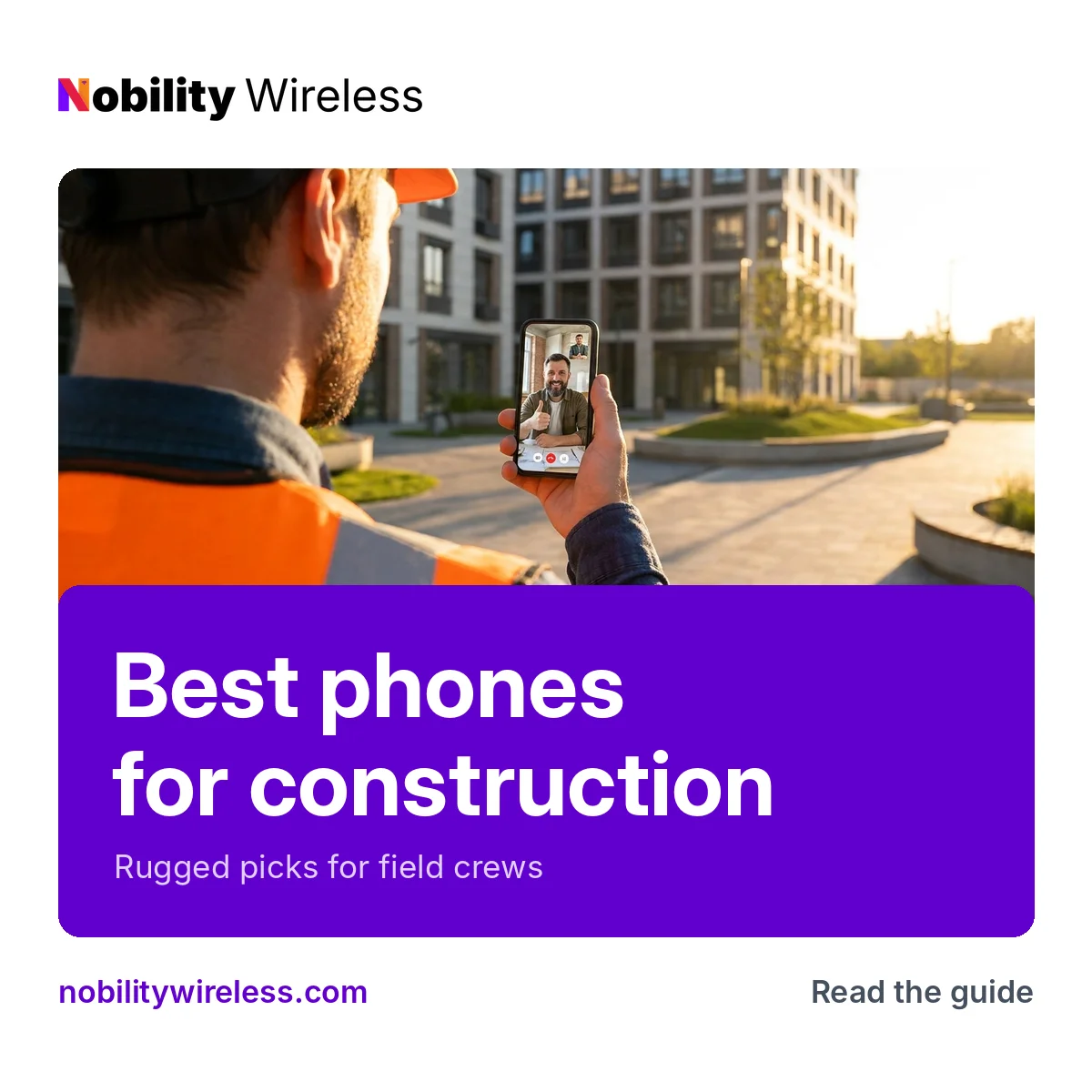
Rugged picks for field crews, phones for foremen and PMs, and what IP68 and MIL-STD-810H actually mean before you trust a spec sheet.
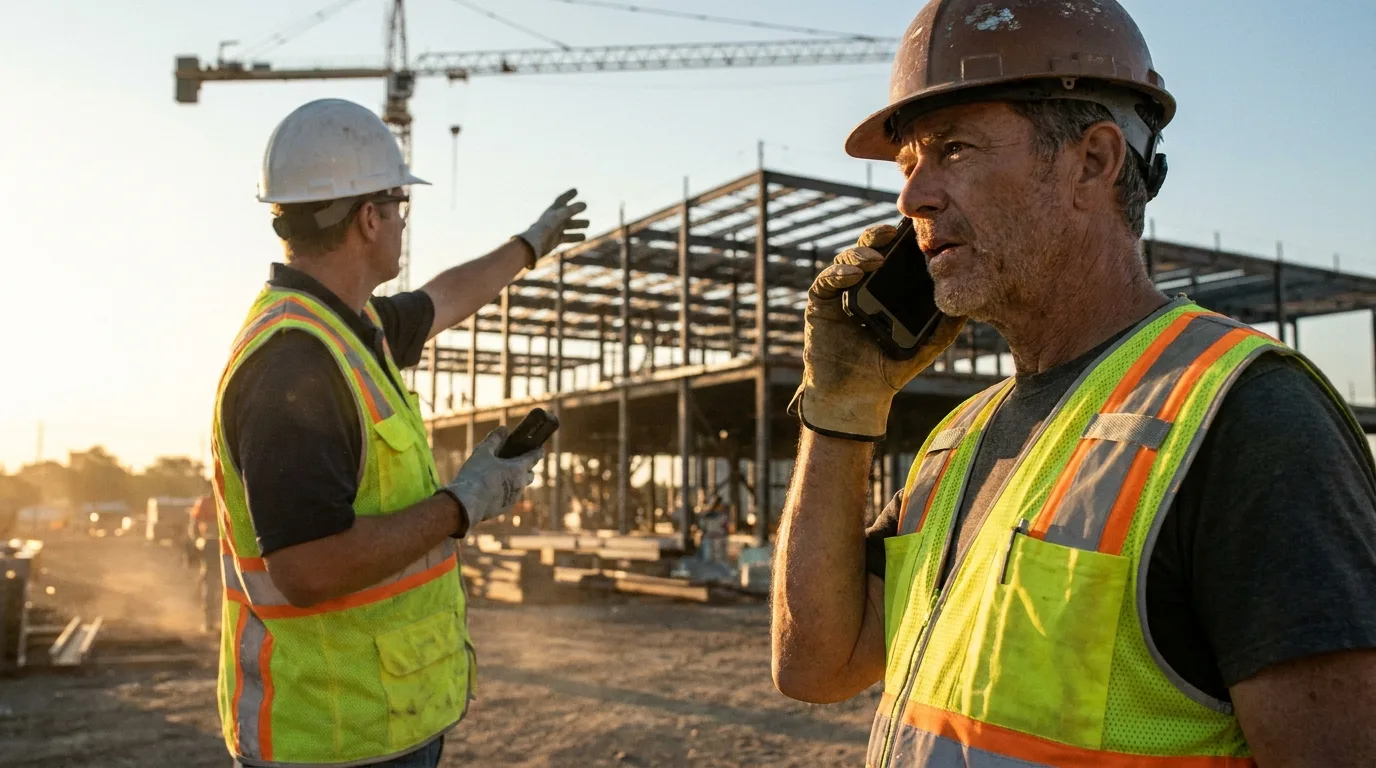
What should a construction crew actually carry? Field crews need phones built for drops and dust, with screens that work through gloves and a battery that lasts the whole shift. Project managers can usually run standard phones in rugged cases. The best phones for construction workers depend on the role, not the spec sheet. Buying one rugged model for everybody wastes money in the trailer, and buying flagships for everybody gets phones broken on the deck. Below are our picks by role, plus radios and how to manage it all. If you’re equipping a whole company, start with our page on phones for construction companies.
What makes a phone jobsite-ready?
A jobsite phone has to survive drops, dust and water, work with gloves on, be heard over equipment and last the shift. After that, it needs to take usable site photos and enroll in your MDM.
Durability ratings
Start with the manufacturer’s IP rating and any MIL-STD-810H testing it claims. We break both down in the next section. They’re useful for comparing phones, but they don’t replace a case. A rating tells you what the manufacturer tested, not what your concrete crew will do to the phone in month eight.
Glove-friendly touch
Gloves come off, phones get dropped. Some phones offer a glove mode or a higher touch-sensitivity setting that helps screens register through thin work gloves, and Samsung’s Touch Sensitivity setting on the XCover6 Pro is built for thin leather gloves. Where the manufacturer doesn’t support it, expect crews to pull gloves off every time they answer a call.
Loud speakers
A phone nobody hears ring is a phone nobody answers. On a site with saws, compressors and equipment running, speaker and ringer volume matter more than screen quality. Test a sample unit on an active site, not in the office.
Battery and charging
The phone has to make it through the shift and any overtime, and cold mornings drain batteries faster. A user-replaceable battery is a real advantage for crews, because a spare in the truck beats a dead phone at 2 p.m. Plan where phones charge, too: in the trucks, in the trailer, or on a shared rack at the gang box.
Cameras for site documentation
Site photos are your record for progress, punch lists, damage and disputes. Rugged phones usually trade some camera quality for toughness. That’s fine for most crew members. For whoever documents the job, the camera matters.
MDM support
Phones should arrive, power on and enroll in Samsung Knox, Apple Business or Android Enterprise without anybody configuring them by hand. If a phone gets left on a tailgate, you want to lock it from the office in minutes, not hours.
What do IP68 and MIL-STD-810H actually mean?
IP68 is a dust and water rating. MIL-STD-810H is a US military test standard that manufacturers test devices against. Both are manufacturer claims, not guarantees.
An IP rating uses two digits. The first covers protection against dust and solids, and the second covers water. A 6 in the first spot means the phone is rated dust-tight. An 8 in the second spot means it’s rated for continuous immersion under conditions the manufacturer specifies. What an IP rating doesn’t cover is drops, and water resistance can weaken as seals wear or after a repair.
MIL-STD-810H is a test standard, not a certification. No agency stamps a phone as passing it. Manufacturers choose which tests in the standard to run and how to run them, so two phones that both say “MIL-STD-810H” may have been through different tests. Read what each manufacturer says it actually tested.
The takeaway: treat both as manufacturer claims, compare like for like, and still budget for cases.
Rugged phone or a standard phone in a rugged case?
Decide by role and how often the phone hits the ground. Crews working with their hands all day should get a rugged phone. People who mostly carry a phone between the truck, the trailer and meetings do fine with a standard phone in a good case.
A purpose-built rugged phone puts the protection in the device itself, often adds a replaceable battery and a programmable button, and holds up to the daily abuse a case alone can’t absorb. The trade-off is a higher upfront cost and a camera that’s a step behind mainstream phones.
A standard phone in a rugged case costs less and usually has the better camera. But it’s only as tough as the case, the screen is still glass, and cases add bulk that some crews end up taking off. If you’ve been replacing a lot of phones for one role, that’s your answer for that role. Track repairs by role for a quarter and the decision usually makes itself. For more on purpose-built devices, see our guide to rugged phones for industrial use.
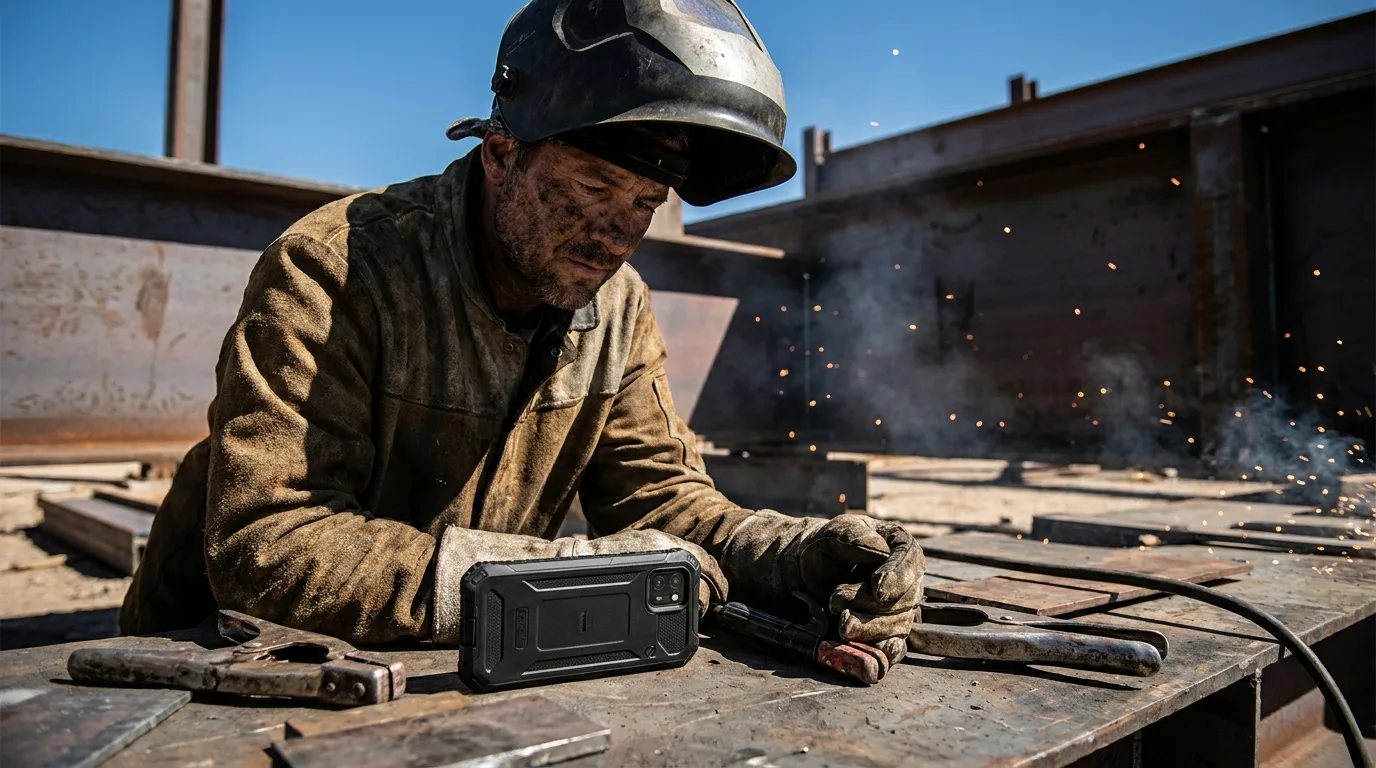
What are the best phones for construction workers, by role?
Rugged phones for field crews, budget phones in rugged cases where money’s tight, and mainstream flagships for foremen, superintendents and PMs who live on email, plans and photos.
| Role | Recommended models | Why it fits | Trade-off |
|---|---|---|---|
| Field crews | Samsung Galaxy XCover6 Pro | Built rugged, with a user-replaceable battery per Samsung | Camera and screen a step below mainstream phones |
| Field crews on a budget | Samsung Galaxy A36 or Galaxy A16 in a rugged case | Lower cost, same Knox management | Only as tough as the case |
| Long shifts, battery first | Moto G Power (2025) | Battery-focused design for long days | Needs a rugged case |
| Foremen and superintendents | Samsung Galaxy S25 or Apple iPhone 16 | Strong cameras for site documentation | Higher cost; needs a case |
| Project managers and estimators | Galaxy S25, iPhone 16 or Google Pixel 9 | Matched to your MDM platform | Highest cost per unit |
Field crews
The Samsung Galaxy XCover6 Pro is the default pick for crews who work with their hands all day. Samsung rates it IP68 and MIL-STD-810H, with a user-replaceable battery, so a spare battery in the truck keeps it going through a long pour. Its programmable XCover key can be set up for push-to-talk apps. The trade-off is that the camera and screen are a step below mainstream phones. For calls, messages and quick site photos, crews won’t miss much. Skip older XCover models for new deployments.
Field crews on a budget
The Galaxy A36 or Galaxy A16 in a rugged case runs the same Knox management for less money. The trade-off is simple: the phone is only as tough as the case you put on it, so don’t cheap out on the case. Source cases separately and order them with the phones so nothing goes out bare.
Long shifts, battery first
For crews on long days who are far from a charger, the Moto G Power (2025) puts battery life first. Motorola rates it IP68 and IP69, and says it’s tested against MIL-STD-810H. It still needs a rugged case for real jobsite use, and it’s managed through Android Enterprise rather than Knox.
Foremen and superintendents
Supers spend half the day documenting: daily reports, inspections, progress photos, problems the owner will ask about later. The Samsung Galaxy S25 and Apple iPhone 16 have the cameras for it. They cost more and they need a case, but a photo that settles a dispute pays for the difference.
Project managers and estimators
PMs and estimators run email, plans, schedules and estimating apps, and they’re in the trailer or the office more than on the deck. The Galaxy S25, iPhone 16 or Google Pixel 9 all work. Pick the one that matches your MDM platform, not the one people ask for. If you’re a Knox shop, our Samsung devices keep the whole fleet on one console. This is your highest cost per unit, so it’s worth matching the phone to the person who actually needs it. Not every phone on the crew has to be a flagship.
What about tablets on a construction site?
Tablets earn their place for plans, drawings and punch lists, but they’re a separate buying decision from crew phones.
Most contractors give tablets to supers and PMs, not the whole crew, and each one needs either a protective case or a purpose-built rugged tablet like the Galaxy Tab Active5. For model picks and setup, see our guide to the best rugged tablets.
Can phones replace two-way radios on a jobsite?
For crews with reliable cell coverage, push-to-talk apps on phones can take over a lot of day-to-day radio traffic. On sites with weak coverage, and for crane and rigging communication, keep the radios.
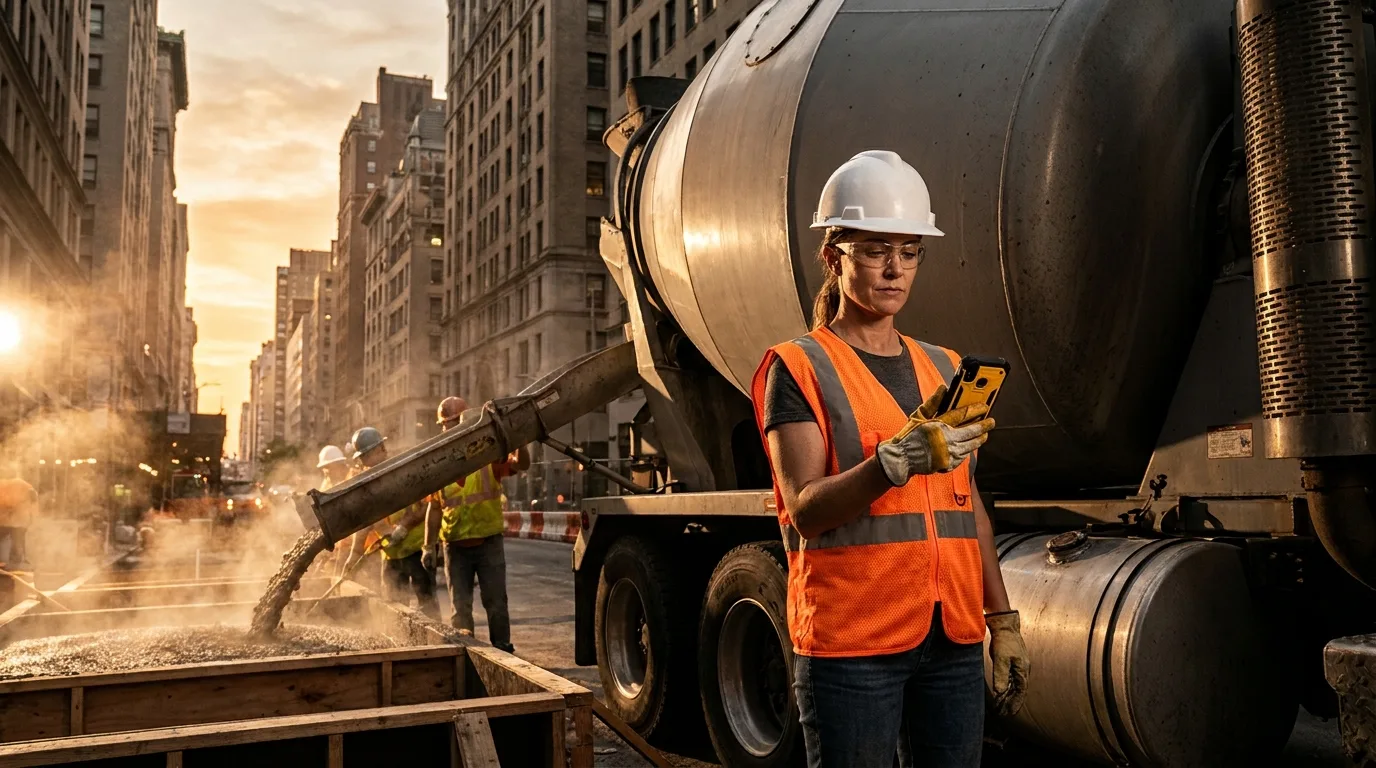
Push-to-talk apps run over cellular or Wi-Fi, which means they fail exactly when coverage does: in basements, inside steel structures, on remote sites, or when the network gets congested. For general coordination on a well-covered site, they work well, and crews carry one device instead of two.
Crane and rigging communication is a different category. When a lift depends on a signal getting through instantly, it stays on the dedicated radio system your lift plan calls for. We don’t sell radios, and we’d still tell you to keep them for that work. Most contractors end up with both: phones for coordination, radios where communication can’t drop.
How should you manage phones across job sites?
Decide shared versus assigned first. Then run lost-device lock, remote wipe and app allow-lists through one MDM platform.
Shared phones work like the tool crib: checked out at the start of the shift, signed into, returned and charged at the end. They cost less per worker but need a clean check-out process. Assigned phones make accountability simple, because one person has one phone. That costs more per head, but nobody argues about who lost it.
Either way, three controls matter most. You need lost-device lock and remote wipe, because phones get left on tailgates and in porta-johns. You need app allow-lists so the phone runs your work apps and not much else. And phones should enroll automatically, so a replacement can go out to a new crew member the same day.
Pick your management by platform. Samsung Knox gives the deepest control over Galaxy devices, Android Enterprise covers Motorola and Pixel, and Apple Business (formerly Apple Business Manager) handles iPhones and iPads. Mixed fleets double the management work, so standardize where you can. Starting with MDM-ready devices means the setup happens once, not phone by phone.
Is refurbished OK for construction crews?
Yes, when devices are graded, inspected, covered by a DOA guarantee and still inside the manufacturer’s update window.
The update window is the part people skip. A refurbished phone from a recent generation, with years of security patches ahead of it, is a smart buy for phones for construction workers who are going to be hard on them anyway. An older model near end of support isn’t, whatever the price. Check each manufacturer’s published update policy before you commit.
Our grades are New, Certified Like-New and Certified Pre-Owned (A+, A, A-). Every device goes through a 35-point PhoneCheck inspection, IMEIs are checked against the GSMA device registry, and every grade carries a 30-day DOA guarantee. Pricing typically lands 20–40% below MSRP, which works out to $100–$400 per unit depending on model. That adds up fast on a crew that goes through phones.
Every device is wiped with Phonecheck, whose erasure is built to NIST 800-88 and has passed ADISA’s Product Claims Test, and each wipe produces a signed certificate of erasure you can request.
Equipping a crew?
Tell us crew size, roles and your MDM platform. Our wholesale phones for construction start at a 10-unit minimum, quotes come back in about 4 hours, and orders ship in 24–48 hours.
Request a quoteFrequently asked questions
Are refurbished rugged phones reliable on job sites?
Yes, when they’re graded, inspected and still getting security updates from the manufacturer. Every device we ship goes through a 35-point PhoneCheck inspection, IMEIs are checked against the GSMA device registry, and every grade is covered by a 30-day DOA guarantee.
What does IP68 mean on a phone?
IP68 is a two-digit rating. The first digit covers dust protection and the second covers water protection. Ratings are the manufacturer’s claims, so compare like for like and still put field phones in a case.
What’s covered if a phone arrives damaged?
Every order is covered by a 30-day DOA guarantee on all grades. If a phone arrives dead or damaged, reach out within that window and we’ll take care of it.
How fast can you equip a new crew?
Send us crew size, roles and your MDM platform and you’ll get a quote in about 4 hours. Orders ship in 24–48 hours.
What’s the minimum order?
The minimum order is 10 units.