
IT PROCUREMENT
Apple, carriers, IT resellers, wholesalers, marketplaces and auctions all sell iPhones by the hundred. Here’s what each one is good for, what it costs you, and how to tell a real supplier from a risky one.
If you’re working out where to buy iPhones in bulk, you have six real options: Apple’s business channel, carrier business programs, large IT resellers, B2B wholesalers, online marketplaces and liquidation auctions. The first three sell new devices. Wholesalers sell new, certified like-new and certified pre-owned iPhones, usually well below list price. Marketplaces and auctions can be cheapest up front, but quality and recourse vary from seller to seller. Wondering about the iPhone Duo? We looked at whether it belongs in a business order.
The right choice comes down to three questions: do you need new devices, how much does unit cost matter, and how much testing do you want done before the phones reach your IT team?
Where to buy iPhones in bulk: your six options
For new iPhones, go to Apple, a carrier or an IT reseller. For lower-cost certified devices, go to a B2B wholesaler. Use marketplaces and auctions only if you can absorb some bad units.
1. Apple’s business channel
Apple sells directly to businesses through its Apple at Work team, which quotes volume orders and offers financing to eligible companies. It also points buyers to partner resellers through the Apple Partner Network. You get new devices, simple warranty coverage and a clean path into Apple’s device management tools. You won’t get certified pre-owned options or wholesale pricing.
2. Carrier business programs
AT&T, T-Mobile and Verizon all sell iPhones to business accounts. The best deals are usually tied to new lines of service and device financing, which works well if you’re also moving your company’s wireless plan. If you only need hardware, or your fleet runs on several carriers, carrier pricing tends to make less sense.
3. Large IT resellers
National IT resellers sell new iPhones alongside laptops and software, often through a procurement portal your finance team already uses. Many can enroll devices into your management tools before they ship. Expect pricing close to list on current models, with discounts that depend on your account size.
4. B2B wholesalers
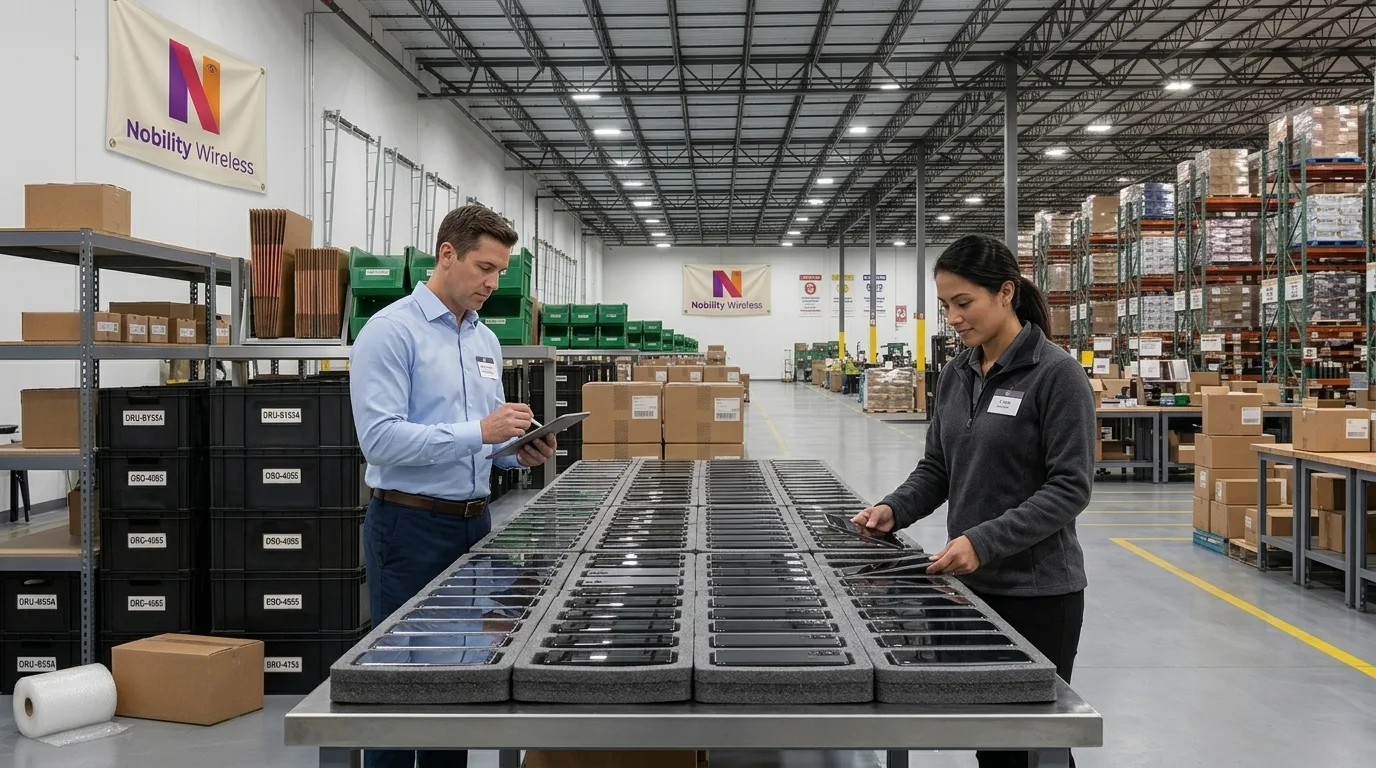
Wholesalers like Nobility Wireless sell new, certified like-new and certified pre-owned iPhones in volume. Certified devices are the big cost lever: Nobility’s units run 20–40% below MSRP, and you can mix models and grades on one order. The trade-off is that you have to vet the supplier properly, which the checklist below covers.
Nobility Wireless bulk-order terms
- Minimum order: 10 units. Mixed models, storage sizes and grades on one order.
- Conditions: new, certified like-new and certified pre-owned, graded A+, A or A-.
- What “certified” means here: the device passed a 35-point PhoneCheck inspection and was wiped with PhoneCheck data erasure.
- Battery health: 80% or higher on certified grades.
- Unlocked: factory unlocked for AT&T, T-Mobile, Verizon and MVNO SIMs (see SpaceX and Boost Mobile for why carrier independence matters).
- Tracking: every IMEI checked against the GSMA device registry; every shipment includes an IMEI manifest and a chain-of-custody record.
- Guarantee: 30-day DOA guarantee on every grade.
- Speed: quotes in about 4 hours; in-stock orders ship in 1–3 business days.
PhoneCheck Device History Reports and erasure certificates are available on request.
5. Online marketplaces
B2B marketplaces list bulk lots from many sellers at once, so you can compare prices quickly. Grading standards, testing and return terms differ from seller to seller, so two “Grade A” lots can arrive in very different condition. They work best for buyers who already know which sellers they trust.
6. Liquidation auctions
Auction sites sell returned and surplus devices in lots, often mixed models sold by listed condition. The upfront price can be the lowest of any channel, but you’ll usually have little recourse if units turn out to be damaged, locked or missing parts. They suit refurbishers, not a company equipping its own staff.
Which buying channel fits your order?
Match the channel to the devices you need and the risk you can carry. Most business fleets buying 50 to 1,000 iPhones end up with Apple or a reseller for new devices, or a wholesaler for certified ones.
| Channel | Best for | Condition | Price | Unlocked? | Watch out for |
|---|---|---|---|---|---|
| Apple business channel | New fleets, financing | New | List price, business financing available | Yes, when bought outright | No certified pre-owned option |
| Carrier business programs | Companies also moving their wireless plan | New | Best when tied to lines of service | Check carrier lock terms | Hardware deals tied to service contracts |
| Large IT resellers | Buyers with an existing procurement account | New | Near list, account-based discounts | Usually | Little savings on current models |
| B2B wholesalers | Cost-sensitive fleets, mixed models and grades | New, certified like-new, certified pre-owned | Nobility: 20–40% below MSRP | Nobility: factory unlocked | Supplier quality varies, so vet first |
| Online marketplaces | Experienced buyers comparing lots | Varies by seller | Varies by seller | Varies by seller | Inconsistent grading and returns |
| Liquidation auctions | Refurbishers and resellers | As listed, often mixed | Lowest upfront | Not guaranteed | Damaged or locked units, little recourse |
New, certified like-new or certified pre-owned: which should you buy?
Buy new for executives and anyone who needs the latest hardware. Buy certified like-new or pre-owned for field teams, shared devices and budget-sensitive rollouts, where the same iPhone at a lower price matters more than an untouched box.
New iPhones carry the manufacturer warranty. Nobility’s certified like-new and certified pre-owned iPhones are graded A+, A or A- by cosmetic condition, have battery health of 80% or higher, and are covered by a 30-day DOA guarantee. Most fleets mix grades by role rather than buying one tier for everyone:
| Role | Good fit | Grade | Why |
|---|---|---|---|
| Executives and sales leaders | iPhone 17 Pro or iPhone 16 Pro | New or certified like-new | Newest hardware and the longest runway before the next refresh |
| Office and hybrid staff | iPhone 17 or iPhone 16 | Certified like-new | Current models at a lower cost than new |
| Field and frontline teams | iPhone 17e or iPhone 15 | Certified pre-owned | Lower unit cost for devices that take a beating |
| Shared and backup devices | iPhone 14 | Certified pre-owned | Lowest cost; confirm it’s on Apple’s current iOS support list |
| Kiosks, intake and field tablets | iPad 11th Generation | New or certified | Cellular (LTE) versions available for use away from Wi-Fi |
How do you vet a bulk iPhone supplier?
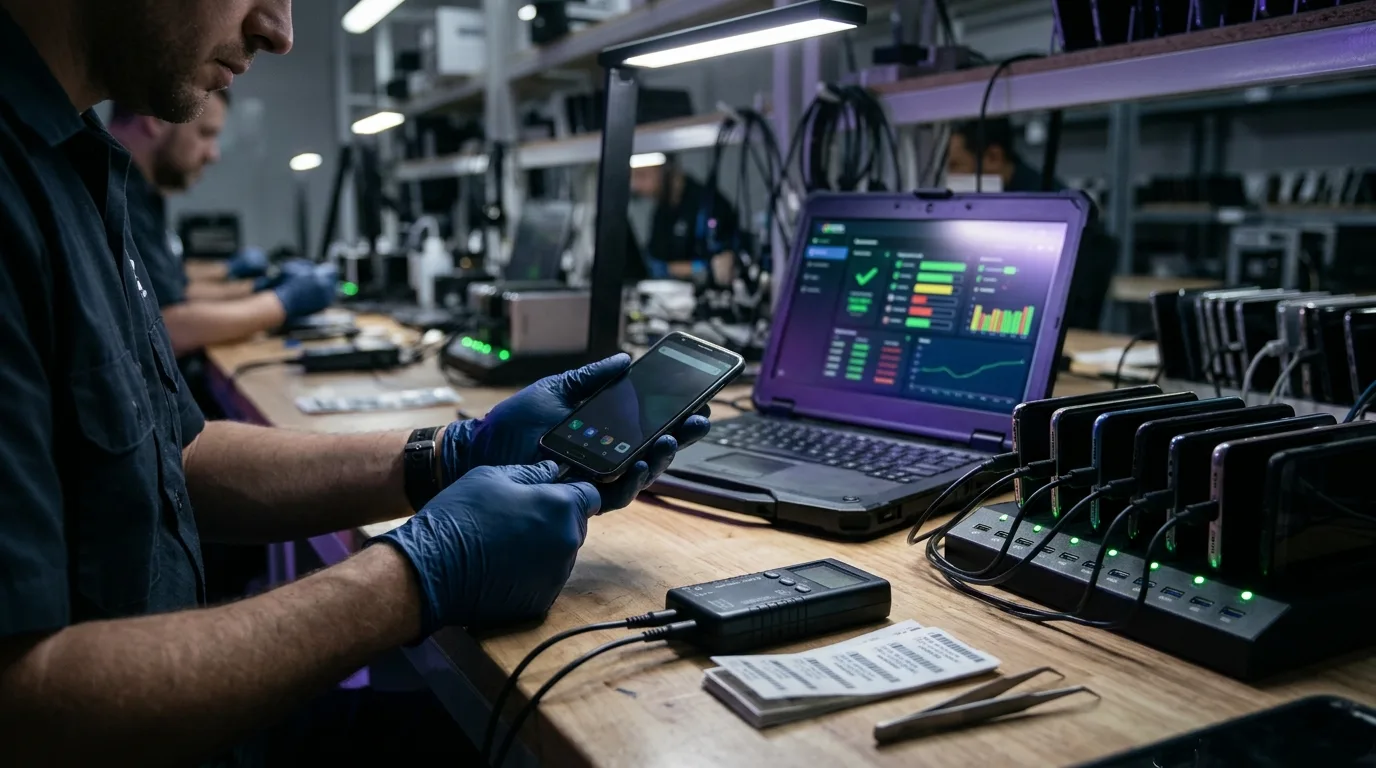
Ask for proof, not promises. A real supplier can show you how devices are tested, graded, wiped and tracked before you pay.
Before you place a large order, get clear answers to these:
- Inspection: what’s tested on every unit, and can you see the report? Nobility runs a 35-point PhoneCheck inspection on every device, and PhoneCheck Device History Reports are available on request.
- Grading: are grades defined in writing, so an “A” means the same thing on every order?
- Battery health: is there a minimum? Ask for the number, not “good battery”.
- IMEI checks: is every IMEI checked against the GSMA device registry, and will you get an IMEI manifest with the shipment?
- Data erasure: are devices wiped with certified erasure software, and can you get the certificates?
- Activation Lock: power on a sample when the order arrives and confirm none of the devices stop at an Activation Lock screen.
- DOA terms: how long do you have to report a dead device, and does the guarantee cover every grade?
- Real inventory: does the supplier hold the stock it’s quoting, or will it source after you order?
Don’t take the answers on trust: ask for the documents behind them, and start with a small sample order before committing to the full quantity. A supplier that gets vague about testing or returns is telling you something.
What does ordering 50, 200 or 1,000 iPhones look like?
With a wholesaler, the process is the same at every size: send a model list, get a quote, approve it, and receive devices with an IMEI manifest. Larger orders just ship in more stages.
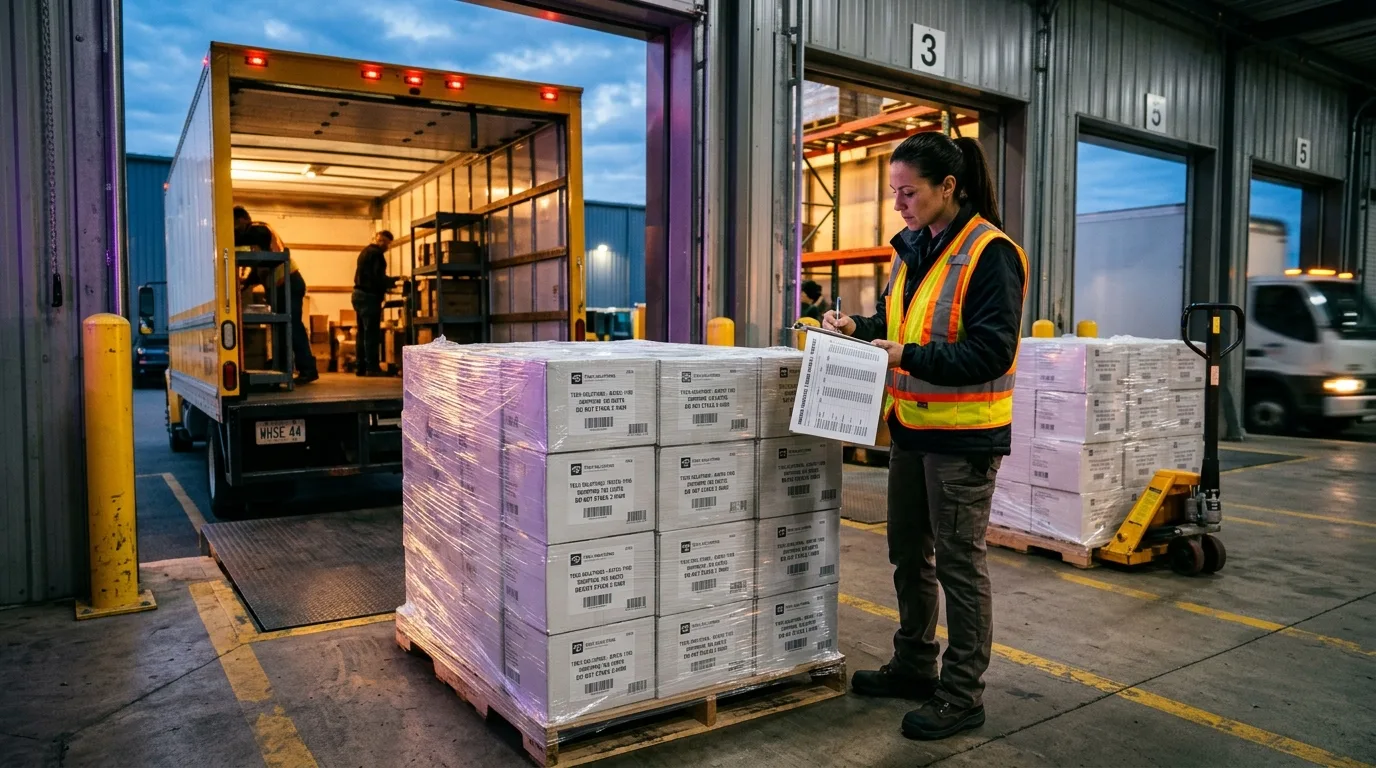
- Send your list. Models, storage sizes, grades and quantities, in any format. Mixed lots are normal.
- Get your quote. Nobility quotes standard configurations in about 4 hours and confirms exact availability for each model and grade on the quote.
- Approve and schedule. In-stock orders ship in 1–3 business days. For large rollouts, staged delivery is standard, so devices arrive in waves matched to your deployment calendar.
- Receive and check. Every shipment includes an IMEI manifest and a chain-of-custody record, so your team can match each unit as it’s unboxed.
Nobility’s minimum order is 10 units, so a 50-unit pilot and a 1,000-unit refresh follow the same steps. If you’re retiring an old fleet at the same time, the device buyback program can take those devices off your hands.
Can bulk iPhones go into Apple Business?
Yes. iPhones you didn’t buy from Apple, an Apple reseller or a carrier can still be added to Apple Business (formerly Apple Business Manager) using Apple Configurator.
Your admin adds each device with Apple Configurator, then assigns it to your MDM, the same way you’d manage devices bought from Apple. There’s one difference: for manually added devices, the user has a 30-day provisional period in which they can release the device from your organization’s management. After that, the device behaves like any other supervised device in your fleet. Apple explains the full process in its Platform Deployment guide.
When you request a quote, tell your supplier which MDM you use and how you enroll devices, so the devices arrive ready for your process.
The bottom line
The short answer on where to buy iPhones in bulk: go to Apple, a carrier or an IT reseller when every device has to be new, and go to a vetted B2B wholesaler when you want the same iPhones for less, in mixed models and grades, with testing documented before anything ships. Skip marketplaces and auctions unless you can absorb some bad units. Whichever channel you pick, ask for the inspection, grading, IMEI and DOA details in writing before you sign off on the order.
Ready to price an order? Send us your model list and quantities, and we’ll quote the whole lot in about 4 hours.
See our wholesale iPhones