The Best Office Phones for Small Business in 2026
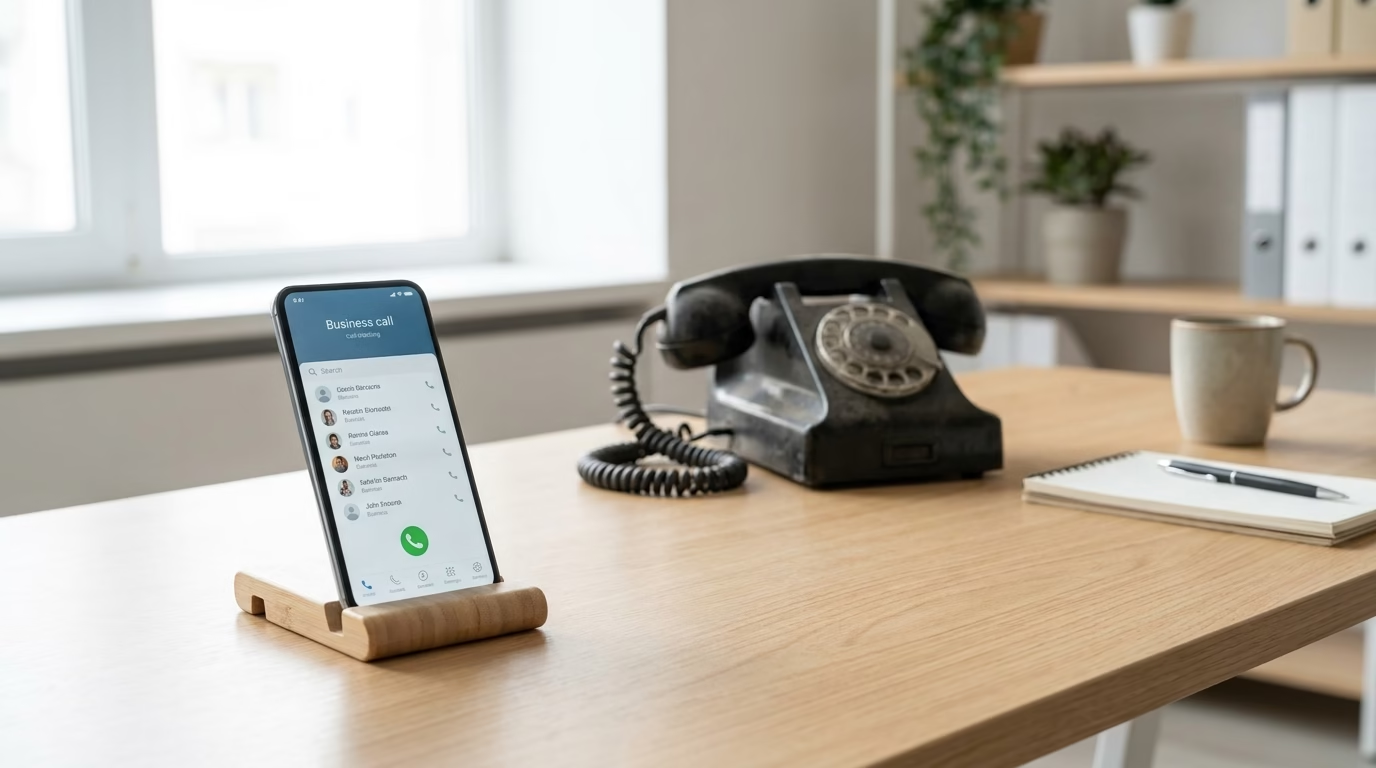
The best office phones for small business in 2026 usually aren't desk phones at all. For most small teams, the smarter setup is a bulk unlocked smartphone paired with a VoIP calling app: it costs less up front, scales without wiring, and works whether your staff are at a desk or out on a job. Desk phones still have a place — but for a growing small business, a mobile-first phone system wins on cost and flexibility.
Below we cover whether small businesses still need desk phones, the three ways to set up office phones (compared side by side), and how to go mobile-first without losing anything that matters. When you want to weigh actual devices, you can compare business phones with our decision tool.
Do Small Businesses Still Need Desk Phones?
For most, no. The desk phone made sense when calls were tied to a copper line and a fixed location. Today, staff work from desks, from home, and from the field — often in the same week — and a phone bolted to a desk can't follow them. Cloud calling (VoIP) delivers the same professional phone number, call transfer, voicemail, and auto-attendant features through an app on a device your team already carries.
That said, "no desk phones" isn't an absolute rule. A busy reception desk, a warehouse floor, or a conference room can still justify dedicated handsets. The point isn't that desk phones are useless — it's that they should be the exception you add deliberately, not the default you build around.
The Best Office Phones for Small Business: A Mobile-First Setup
For the typical small business, the strongest office phone setup is bulk unlocked smartphones running a VoIP business-calling app. You get business numbers, call routing, and voicemail-to-email in software, on hardware that's cheaper than a fleet of desk phones and useful for far more than calls. Adding a person is a new phone and a new app seat — no wiring, no PBX box, no technician visit. Because the devices are unlocked and bought in bulk, you also avoid carrier lock-in and keep the whole team on consistent hardware.
Not sure which handsets to standardize on? Our guide to the best cell phones for small business breaks down current picks across budget, mid-range, and premium tiers.
Three Ways to Set Up Office Phones, Compared
Here's how the main approaches stack up for a small business today:
| Setup | Upfront cost | Flexibility & remote work | Scalability | Maintenance | Best for |
|---|---|---|---|---|---|
| Traditional landline / PBX | High (hardware + wiring) | Poor — tied to the desk | Slow (rewiring/expansion) | High | Legacy offices with unreliable internet |
| VoIP + desk phones | Medium (handsets per seat) | Medium — desk-centric | Good | Medium | Fixed desks that want a familiar handset |
| Bulk smartphones + VoIP app | Low (no wiring, one device does it all) | Excellent — works anywhere | Excellent — add a phone + a seat | Low | Most small businesses today |
For a small team watching costs and hiring as they grow, the bottom row wins on nearly every axis — which is why mobile-first is now the default recommendation rather than the exception.
What to Look For If You Go Mobile-First
Three things make a mobile-first office phone setup work. First, the right devices: unlocked business smartphones with long security-update support, bought in bulk so the fleet stays consistent. Second, a reputable VoIP app — the FCC's VoIP consumer guide is a good primer on how internet calling works and what to expect. Third, a stable network, since call quality rides on your internet and cellular signal.
Two caveats worth planning for: know how your provider handles emergency calls, because VoIP 911 works differently from a traditional line; and secure the devices with basic mobile hygiene along the lines of CISA's mobile security guidance. Neither is a dealbreaker — they're just setup steps.
When a Desk Phone Still Makes Sense
Keep desk or cordless handsets where a fixed station genuinely needs them: a front desk that answers all day, a conference room, a warehouse counter. In those spots a dedicated VoIP desk phone is worth it. For everyone else — owners, sales, field staff, hybrid workers — the phone in their pocket already does the job better. A mixed setup is fine; just let mobile be the default and add desk phones only where the role demands one.
Buying Office Phones for Your Small Business in Bulk
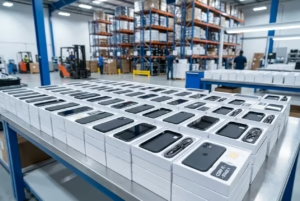
Whether you go fully mobile or a mix, buying in volume from one supplier keeps things simple: consistent devices, predictable lead times, and one point of contact for replacements. We supply bulk unlocked, business-ready smartphones — inspected, warrantied, and ready for any VoIP setup. Start with our business smartphones in bulk page to see what's available at volume.
Ready to plan your setup? Compare business phones with our decision tool, then request a wholesale quote on the models that fit your office.
Frequently Asked Questions
Do small businesses still need desk phones?
For most, no. Cloud calling (VoIP) delivers business numbers, call transfer, voicemail, and auto-attendant through an app on a smartphone your team already carries, and it follows staff between desk, home, and field. Desk phones still make sense for fixed stations like a reception desk or warehouse counter, but they should be the deliberate exception, not the default.
Can smartphones replace an office phone system?
Yes. Bulk unlocked smartphones paired with a VoIP business-calling app provide the full feature set of a traditional phone system — business numbers, routing, voicemail-to-email — with no PBX hardware or wiring. Adding a person is a new phone and a new app seat, which is why most small businesses now build around mobile rather than desk phones.
Is a mobile-first phone system cheaper?
Usually, yes. You skip PBX hardware, wiring, and per-desk handsets, and one device covers calling plus everything else your team does on a phone. Costs scale linearly — a new hire is one more phone and one more app seat — instead of requiring infrastructure upgrades as you grow.
What about 911 calls on VoIP?
VoIP 911 works differently from a traditional line — it may not automatically transmit your location, and behavior varies by provider. Confirm how your VoIP provider handles emergency calls before you switch, and keep at least one reliable way to reach 911 on site. For most mobile-first setups this is a non-issue, since the smartphones also place normal cellular 911 calls.
How many phones before I get bulk pricing?
Bulk pricing starts at lower volumes than most owners expect, so even a small office can qualify. The bigger wins are consistency across the team, predictable lead times, and one contact for replacements. Request a wholesale quote for the quantity you actually need rather than buying at retail.
Build a phone setup that scales with your office
Get wholesale pricing on unlocked, VoIP-ready business phones — inspected, warrantied, and ready to deploy.
Request a Wholesale Quote